While Christmas 2014 on Boracay Island in the Philippines left quite a bit to be desired, this past holiday season was made significantly more enjoyable by my family meeting me in Europe!
Just two days after my exciting excursion to Neuschwanstein Castle in Germany, I hopped on an early morning bus from Munich to Prague.
Getting started that early is never fun, but the sunrise that morning sure made up for it!

The first few days of our time in the city was spent at a lovely Airbnb just off the main square in Praha 1, and then we moved into an apartment a bit more north in Praha 7. Both neighborhoods, while being quite different from one another, were equally lovely.

Prague’s Old Town Square was decked out for the holidays, with numerous stalls selling mulled wine, sausages, ham, gingerbread, Trdelník, and lots of little gifts and souvenirs.

There was even the occasional traditional performer with the coolest elf shoes ever.


SANDEMAN’S NEW EUROPE TOURS
One of the best things we did whilst in Prague was take multiple tours with Sandeman’s Tours. I’d personally done numerous free walking tours with them over the past year, but I’d never taken part in any of their paid tours.
Once settled into Prague, the four of us initially participated in their free walking tour to get a lay of the city, and a feel for what else we might want to do during our time there.

We ended up doing three different tours with them: The Terezin Concentration Camp, Kutna Hora (and the bone church), and the Prague Castle tour.
THERESIENSTADT CONCENTRATION CAMP
As quoted from the Sandeman’s website, “Just one hour outside of Prague lies Terezín, a magnificent former 18th century Austrian fortress with a terrible past. The former garrison became a refugee centre for Czechs fleeing Adolf Hitler’s annexation of the Sudentenland. When the rest of the country soon fell into Nazi clutches it became a Gestapo prison, a Jewish ghetto and then a deportation camp sending trains directly to Auschwitz. Terezín’s story is a combination of life and death: the tragedy of the Holocaust contrasts with the prisoners’ secret celebrations of culture, politics and faith.”
As I had previously been to the Dachau Concentration Camp in Munich (pictured below), the first concentration camp opened by the Nazis in Germany, it was quite interesting to see the contrast between the two camps.


While Dachau had looked like your stereotypical concentration camp, the ones you see in movies and the like, the Terezín Concentration Camp looked more like a sleepy little town.

And to me, that made it feel creepy on an entirely different level.
Because, just walking through, you’d probably never know what was going on there (it was even investigated by the Red Cross at one point and nothing was found amiss). It looked like a nice town, yet tens of thousands of people were held there and/or died there (many of them children), and more still later sent by rail to their deaths at extermination camps.

The Nazis used it mainly as a propaganda tool, using it to portray it as a township for resettling Jews to their own community. They even filmed a movie there to display Terezín as a wonderful place to live.
The camp was finally liberated on May 8, 1945 by Soviet troops.
KUTNÁ HORA
Kutná Hora is a lovely little Bohemian town just one hour outside of Prague by train. It’s rich heritage comes from a time when the town was the main location for the mining of silver and the subsequent creation of the country’s money at the time, the Prague Groschen.
But what the town these days is most famous for is the Sedlec Ossuary, or the Bone Church.

The World Heritage Site Sedlec Ossuary is a small Roman Catholic chapel located beneath the Cemetery Church of All Saints, and is estimated to contain the skeletons of between 40,000 and 70,000 people.

The bones have been artistically arranged to form decorations and furnishings for the chapel.

The main attraction here is the chandelier, which is said to be composed of every single bone in the human body.

Another notable piece is the coat of arms of House of Schwarzenberg, the family who, in 1870, employed woodcarver František Rint to arrange the bones as they still appear in the ossuary.

PRAGUE CASTLE
Prague Castle is actually more of a complex than your tradiational castle, and is the official residence of the President of the Czech Republic. According to the Guinness Book of Records, Prague Castle is the largest ancient castle in the world due to its spread out ‘complex like’ layout!

The main attraction is actually not the castle itself, but St. Vitus Cathedral, which lies within the castle complex.

We were very lucky that we chose to do this tour on Christmas Eve, as it is the one day of the entire year in which the entire cathedral is open to the public.

Usually the back portion of the cathedral is closed off, but on the 24th of December, full access is given to all, so if you happen to be in Prague over the Christmas holiday, schedule a tour of the castle/St. Vitus Cathedral on this day!

CHRISTMAS IN PRAGUE - A SUMMARY
Our dinner on Christmas day was lots of fun, as we attended a traditional Folklore Party Dinner.
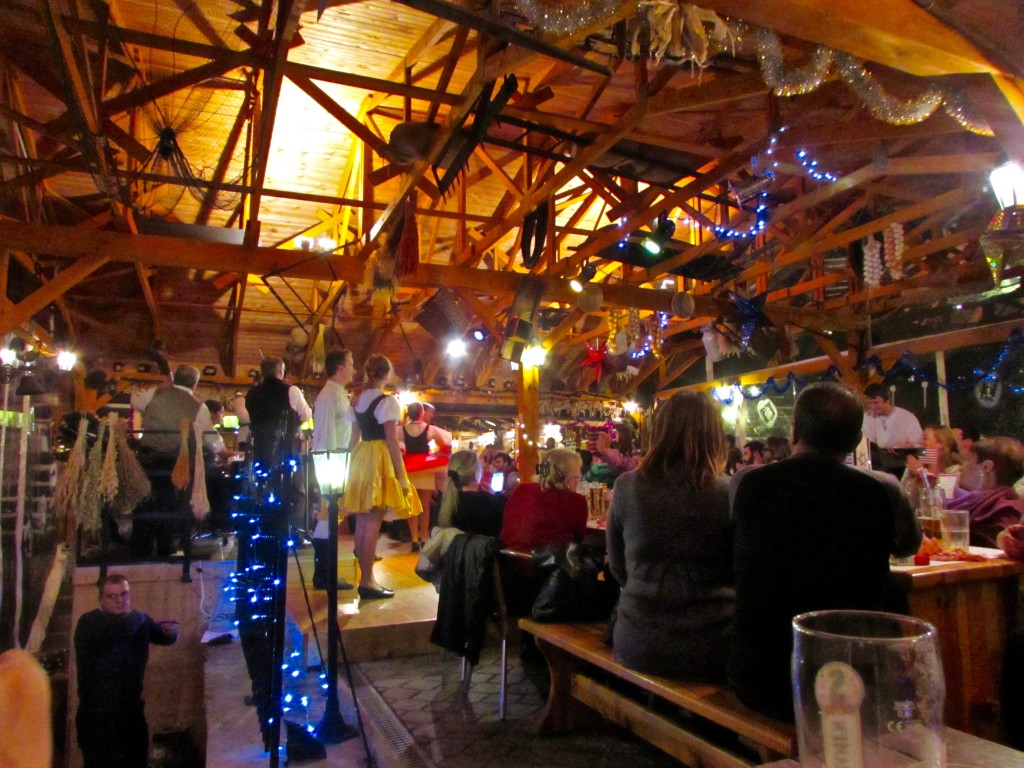
There were huge, long tables full of people from all over the world, copious amounts of free flowing food and drinks, and even more dancing and singing.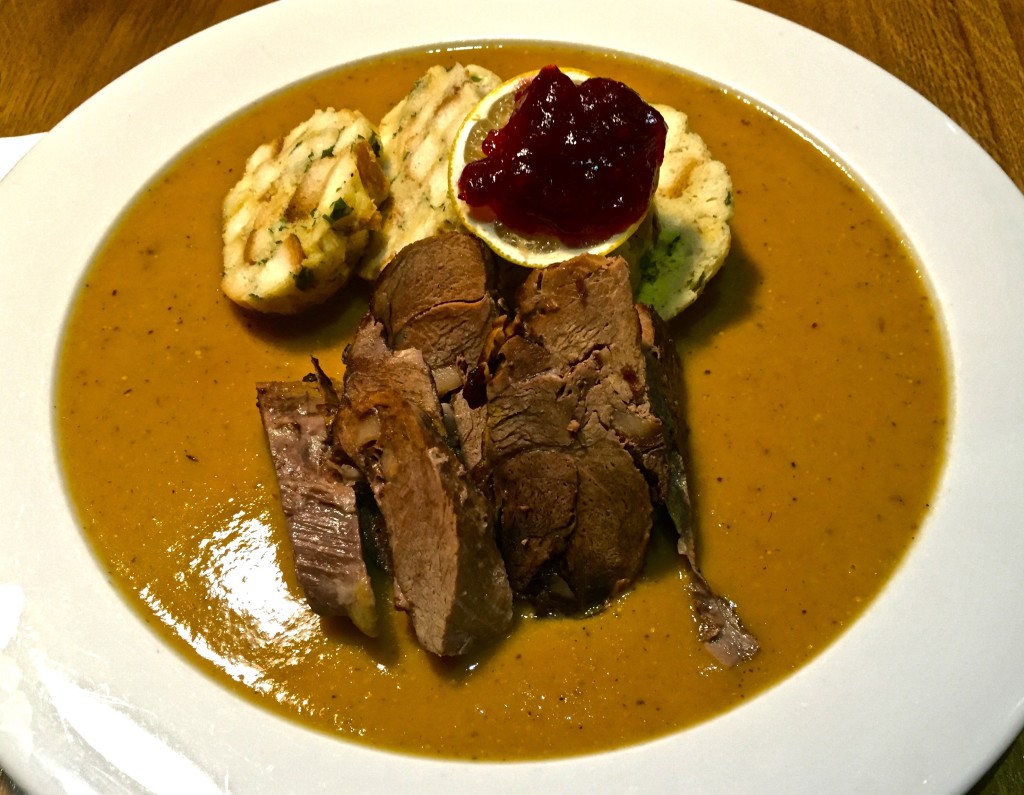
Spending Christmas in Prague was a wonderful adventure.
The old feeling of the city, the beautifully decorated tree in the center of town, the large crowds waiting to watch the Astronomical Clock (while beautiful, voted the second most overrated tourist attraction in the world for a good reason), the fun and sometimes crazy architecture, the copious amounts of good food for an obscenely low price, and the fact that a pint of beer costs less than a water, made our time in Prague one to remember.


Have you ever spent a Christmas abroad? How was it different from your normal holiday?

[mc4wp_form]